· Skinvestments
Cost Basis and Record-Keeping for CS2 Skins
Build a clean acquisition ledger for CS2 skins: dates, costs, trades, trade-ups, and drops - so P&L stops being a guess.
cs2 · cost-basis · records · portfolio
Why records beat vibes
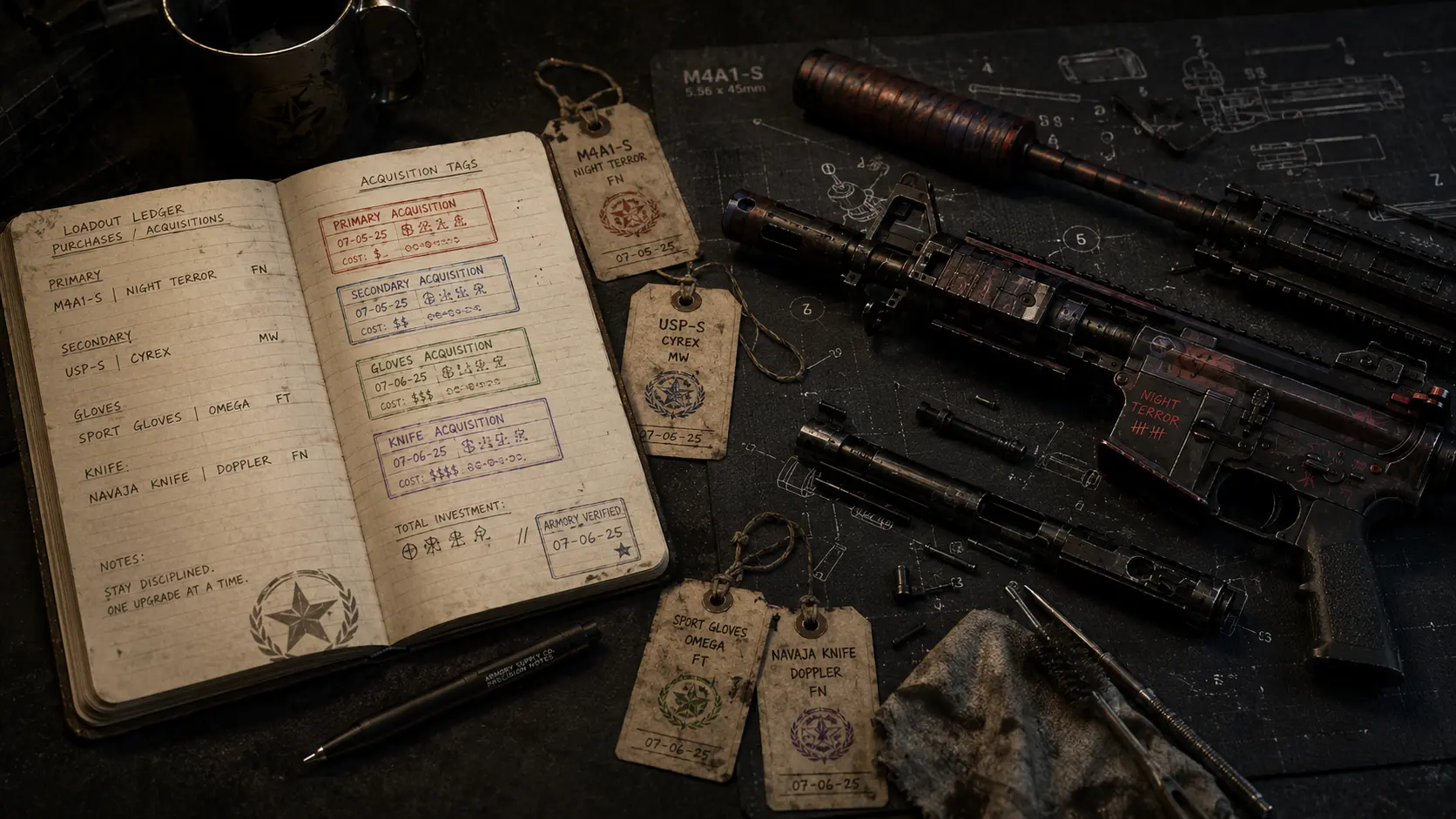
Ask ten players what they paid for a skin they have held a year. Many will shrug. Without cost basis, “profit” is storytelling.
You do not need corporate accounting. You need a consistent ledger.
Minimum fields per lot
Treat each acquisition as a lot:
- Item name + exterior (+ float note if you care)
- Quantity
- Acquisition date
- Acquisition type: buy / trade / trade-up / drop / gift
- Cost basis in one currency you choose for reporting
- Source market or counterparty note
- Storage location
- Optional thesis tag (
play skin,liquid hold,event)
When you sell, add sale date, market, gross, fees, net.
Trades and trade-ups
Trades: assign a fair value at the time using a liquid mark, and note it. Perfect precision is impossible; contemporaneous estimates beat rewriting history later.
Trade-ups: cost basis of the output is the sum of inputs (and any fees). Do not pretend the output’s first Steam ask was your cost.
Drops and gifts
Drops can be basis zero. Still log them. Zero-basis sales are still taxable events in some jurisdictions - this guide is not tax advice; check local rules and a professional if needed. From a portfolio view, drops are free inventory that still deserves tracking.
Cadence
- Log acquisitions the day they happen (or weekly at worst)
- Reconcile Steam inventory vs ledger monthly
- After big patches, freeze a snapshot for later comparison
Tools like Skinvestments reduce the pain of syncing what you own; you still own the discipline of what you paid.
What good records unlock
- Honest ROI after fees
- Cleaner decisions on update weeks
- Less emotional attachment to positions that only feel cheap
Start simple. A complete modest ledger beats an abandoned complex one.